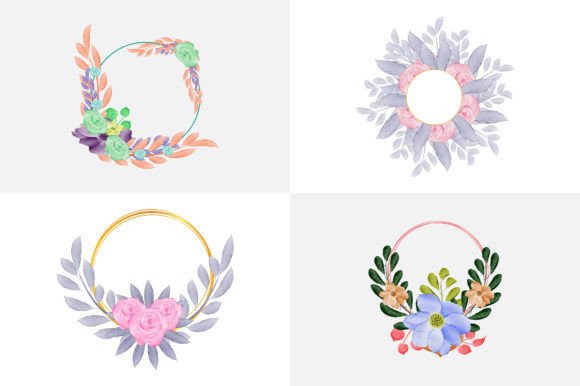
Watercolor Floral Frame Set
A Designer’s First Glance: Soft, Fluid, and Purposefully Imperfect
When I opened the Watercolor Floral Frame Set for the first time, I didn’t see “vector graphics”—I saw a mood. Delicate blooms bleeding softly at the edges, stems that taper like breath, and negative space that invites stitching rather than fights it. This isn’t a rigid ornamental border; it’s a gentle, organic frame—like something you’d sketch in watercolor before translating to thread. As an embroidery designer who’s stitched hundreds of floral motifs, I immediately sensed its potential for projects where subtlety and handmade warmth matter more than sharp precision.
Real-World Test: Embroidering a Linen Kitchen Towel for a Local Boutique
Last week, I used the Watercolor Floral Frame Set to create a limited-run batch of embroidered linen tea towels for a neighborhood kitchen boutique. The client wanted “elegant but approachable”—no stiff monograms, no overworked density. We centered the frame on the lower corner, scaled it to 4.2 inches wide, and stitched it in soft ecru cotton thread on oat-colored linen. The result? A quiet focal point that elevated the towel without overwhelming it. Customers noticed the texture—the way the satin stitch petals caught light differently than the looser fill stitches in the leaves—and several asked if it was hand-stitched. That’s the kind of impression this set delivers: intentional, artisanal, and quietly confident.
Where It Shines (and Where It Asks for Thoughtful Handling)
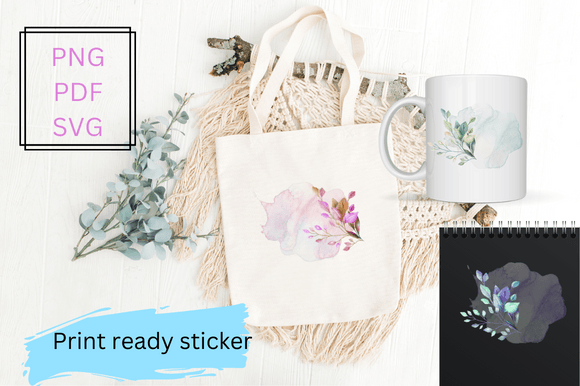
The Watercolor Floral Frame Set excels in medium-to-large applications where fabric breathes and detail can settle: sweatshirt cuffs, tote bag corners, pillow cover borders, baby blanket hems, and apron pockets. Its open layout avoids heavy fill stitch clusters, so it stitches cleanly on stable fabrics like midweight cotton, twill, and linen blends—even with moderate stabilizer. On a structured cap front? It works best when simplified or repositioned to avoid the curved seam line near the bill. On stretchy jersey or thin rayon? I’d add lightweight cutaway stabilizer *and* reduce density slightly in the leaf veins to prevent puckering.
It’s not ideal for tiny hoops (under 3 inches) or dense, high-contrast applique designs—those fine watercolor edges lose definition when shrunk too far. And while the vector source gives flexibility, remember: converting to a machine embroidery design requires careful digitizing. The original AI vector doesn’t auto-translate to optimized stitch paths. If you’re using it for commercial embroidery, test stitch the full design on your target fabric *before* cutting production runs.
What It Adds to Your Finished Product—Beyond Aesthetics
This set elevates perceived value—not through flash, but through intention. A personalized gift wrapped in a towel framed by the Watercolor Floral Frame Set feels curated, not mass-produced. An Etsy listing featuring it on a cream baby onesie communicates care and attention to detail—traits buyers associate with trusted craft businesses. For small shop owners, it reinforces brand consistency when used across product categories: same frame style on tea towels, pillow covers, and holiday gift tags creates visual cohesion without repetition.
But it also asks for honesty from the maker. Because it leans into softness, it won’t hide poor thread tension or inconsistent hooping. Customers notice when a petal blurs or a stem wobbles—so it rewards clean technique and thoughtful execution. That’s not a flaw; it’s a filter. It helps your best work stand out and gently steers you away from rushing low-stakes projects.
Practical Notes Every Embroidery Designer Should Check
- Test first: Stitch the full Watercolor Floral Frame Set on scrap fabric matching your final project’s weight and weave—especially if using textured or dark fabric.
- Thread color matters: Lighter threads (ivory, sage, heather grey) honor the watercolor feel; high-contrast black or navy shifts the mood toward graphic illustration.
- Stabilizer strategy: Use tear-away for stable cottons, cutaway for knits or loosely woven linens, and consider topping for napped or fuzzy surfaces.
- Review stitch density: Look for areas where fill stitches might crowd delicate outlines—adjust density manually if needed, especially in tight curves or layered petals.
- Hoop size check: Confirm the design fits comfortably within your hoop’s active stitching area—don’t rely solely on the vector’s bounding box.
- Mockup wisely: Preview the design in both light and dark fabric mockups. Its watercolor transparency means background color changes how “present” the frame feels.
- Licensing clarity: Since this is marketed as a Graphics asset for Crafts, verify whether the license permits commercial use of finished embroidered products—or only digital resale of the vector itself.
Not Just Decoration—A Design Partner for Meaningful Making
The Watercolor Floral Frame Set doesn’t shout. It listens. It works with natural fabric textures instead of against them. It supports personalization without demanding perfection—making it ideal for baby embroidery, wedding gifts, holiday embroidery, and boutique branding where emotional resonance matters more than pixel-perfect symmetry.
As a designer who’s seen trends come and go, I appreciate how this set avoids looking dated. Its softness isn’t trendy—it’s timeless. It suits an Etsy seller launching her first embroidered pillow line, a craft fair vendor adding custom touches to aprons, or a small apparel decorator building a signature look for local cafes and florists. What makes it valuable isn’t just what it is—but how thoughtfully it invites you to engage with your process: choosing the right stabilizer, testing contrast, honoring fabric character, and trusting that sometimes, the most professional thing you can do is let the watercolor bleed just a little.
Final Thought Before You Stitch
If your next project needs quiet elegance—not bold statement—then the Watercolor Floral Frame Set is worth your time. But treat it like a collaborator, not a shortcut. Let it guide your choices about thread, fabric, and finish. Then stitch it with the same care you’d give a handwritten note inside a personalized gift. That’s where this design truly comes alive—not in the vector file, but in the finished product, held in someone’s hands.