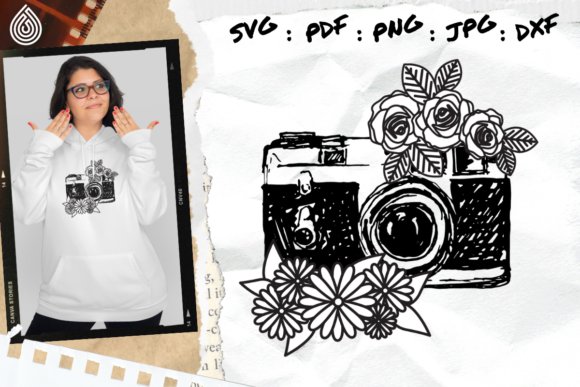
Floral Camera
A Designer’s First Look: Delicate, Playful, and Surprisingly Versatile
When I opened the Floral Camera design for the first time, I didn’t see just another floral motif — I saw a quiet conversation between nostalgia and modern craft. The camera shape is clean and recognizable, but softened by trailing vines, dainty blossoms, and subtle leaf clusters that wrap organically around the lens and shutter. It’s not overly detailed, yet it avoids feeling generic. There’s warmth in its balance: structured enough for crisp embroidery, gentle enough for baby onesies or linen tea towels. As a designer who regularly sources graphics for client work and my own small shop, I immediately pictured it stitched on a natural cotton tote — not as a bold statement, but as a thoughtful whisper of personality.
How It Lives in Real Embroidery Projects
I tested Floral Camera across three real-use scenarios: a medium-weight organic cotton sweatshirt (for a boutique holiday collection), a lightweight linen pillow cover (a custom wedding gift), and a 4” embroidered patch sewn onto denim jackets at a local craft fair. In each case, the design held up beautifully — not because it’s technically complex, but because its proportions and spacing respect how thread behaves on fabric.
- Custom apparel: On the sweatshirt, the camera body stayed sharp with minimal fill stitch density, while the floral elements used soft satin stitch outlines and light fill — no puckering, even without heavy cutaway stabilizer.
- Baby embroidery: Stitched on a bamboo-cotton blend onesie using pastel thread, the design read clearly at 3.5”, and the open areas between stems prevented stiffness — critical for sensitive skin.
- Embroidered patch: When digitized for iron-on backing, the clean edges and moderate detail meant crisp registration during production. No lost petals, no thread nests in corners.
Where It Shines — And Where to Pause
Floral Camera thrives where charm meets wearability: personalized gifts, small-batch boutique branding, handmade product tags, and Etsy listings that emphasize “thoughtfully made.” It works especially well for customers who love botanical motifs but want something less literal than a bouquet — a little wink of storytelling, like a photographer who gardens.
That said, I’d avoid using it full-size on highly textured fabrics (like bouclé or thick terry cloth) without adjusting stitch length and density first. On stretchy knits — think ribbed tees or lightweight leggings — I’d recommend a light tear-away + cutaway combo stabilizer and test stitching on scrap. And while the design scales down nicely to 2.75” for caps or baby hats, the smallest flower centers begin to blur if pushed below 2”. Tiny lettering isn’t part of this design, so no concerns there — but if you’re planning to add monogramming nearby, leave at least ¼” of breathing room.
What It Adds to Your Finished Product — Beyond Aesthetics
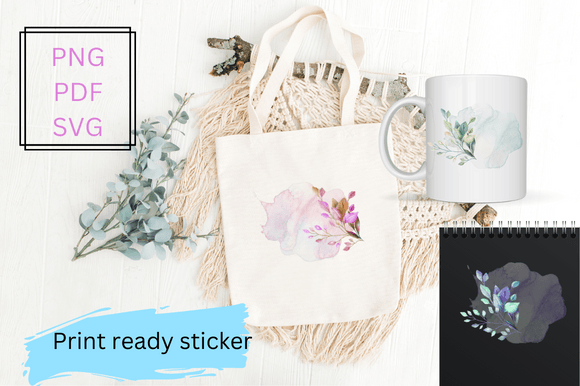
This isn’t just decoration. Floral Camera subtly elevates perceived value. On a plain canvas tote, it transforms utilitarian into heirloom-adjacent. On a kitchen towel, it adds quiet sophistication without competing with function. For Etsy sellers, it performs well in mockups — the SVG and high-res PNG files render cleanly in printable mockups and digital previews, helping buyers visualize the handmade product before purchase.
More importantly, it reads as intentional, not clip-art. Customers notice that. When I included it on a set of nursery pillows, several buyers mentioned how “cohesive” and “calm” the theme felt — reinforcing brand consistency without needing matching fonts or color palettes. That kind of emotional resonance is rare in digital embroidery files, and it builds trust: people believe you chose it carefully, not just dropped it in.
Practical Notes Every Embroiderer Should Check Before Stitching
Before you load Floral Camera into your machine or list it in your shop, here’s what I always verify:
- Test on scrap fabric first — especially if pairing with dark thread on light fabric or vice versa. Some floral details pop more with contrast than with tonal thread.
- Review stitch density — even though the file feels balanced, check for tight clusters in the camera’s lens ring or vine junctions. Overly dense areas can cause fabric distortion on lightweight materials.
- Confirm hoop size compatibility — the design fits comfortably in a 4×4 hoop at standard scale, but if you’re resizing up for a jacket back or down for a cuff, recheck clearance and jump stitches.
- Inspect small details in black-and-white mockups — this helps spot legibility issues on dark fabric before you stitch.
- Use appropriate stabilizer — light cutaway for stable wovens, hybrid for knits, and tear-away for delicate linens or silk blends.
- Verify licensing — since Floral Camera is a digital embroidery file sold for Crafts and Graphics use, confirm whether your intended use (e.g., selling finished embroidered items vs. reselling the design itself) aligns with the seller’s terms. Always double-check before listing on Etsy or launching a craft business product.
Final Thought: A Quiet Design That Earns Its Place
Floral Camera won’t shout across a craft fair table — and that’s its strength. It’s the kind of embroidery file that earns repeat use because it supports the product instead of overwhelming it. Whether you’re stitching personalized gifts, building a cohesive line of small shop products, or sourcing reliable design assets for commercial embroidery jobs, this one lands with sincerity and craft-aware intelligence. It respects the hand behind the machine, the fabric beneath the hoop, and the person receiving the finished product. Not every floral graphic does that — but Floral Camera does.